Why Are My Gutters Overflowing? What to Check First
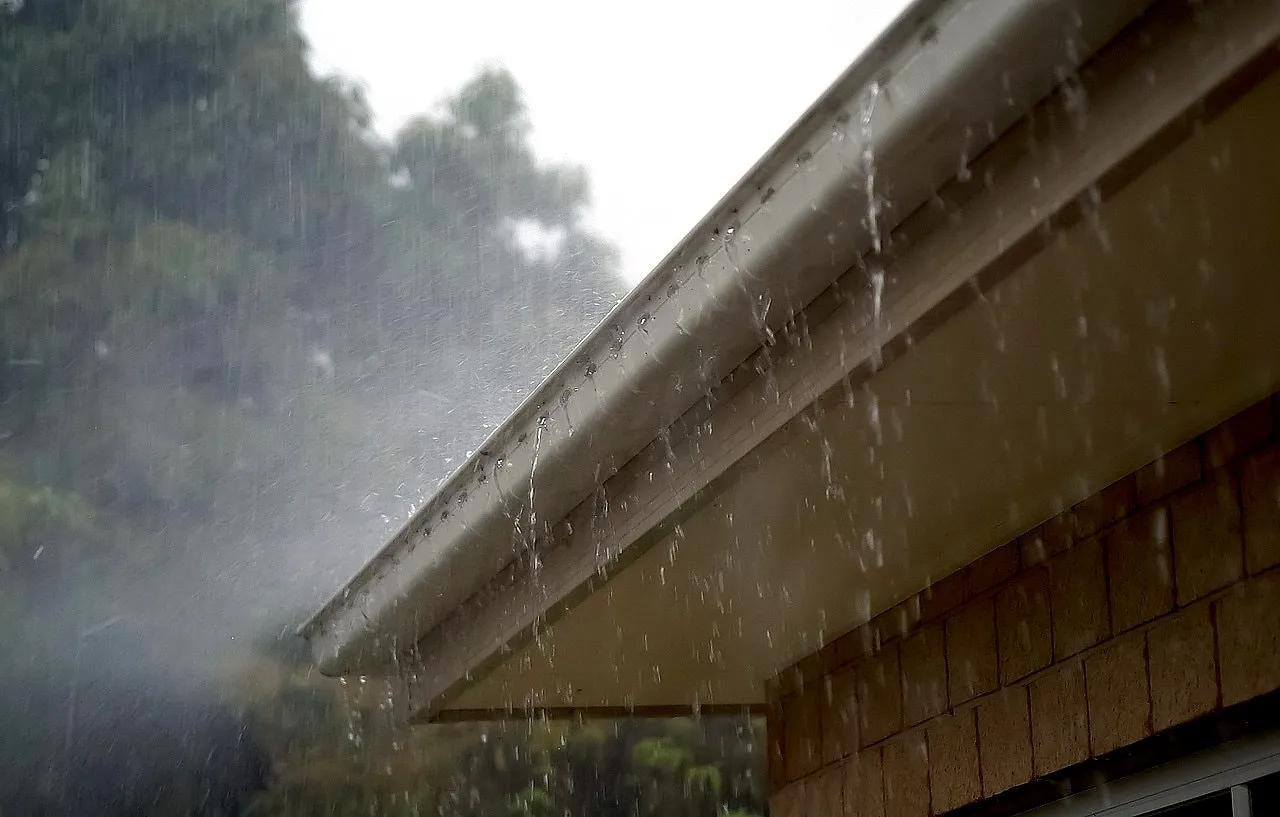
Gutters usually overflow because of debris in the gutter or its outlet, a sagging section, gutters or downspouts too small for the roof above them, a roof valley sending more water than one spot can carry, or a problem at the roof edge. Where the water goes tells you which to check first. Water spilling over the front near a downspout can point to a blockage. Water running behind the gutter calls for a closer look at the roof edge. A puddle where the downspout ends may mean the gutter is doing its job and the problem is at ground level.
The next time it rains, watch from a doorway or another safe spot on the ground, and stay off ladders and the roof. Note where the water first spills, whether the downspout is flowing and where the runoff ends up. A short video of the gutter and the ground below it can help a contractor find a problem that disappears once the weather clears.
What the Overflow Pattern Can Tell You
Use this table to narrow down where to look, based on what you can see from the ground.
| What you see | What to check first |
|---|---|
| Water spills over the front near a downspout, but little comes out of the outlet you can see | Debris at the gutter outlet, a blocked downspout elbow or an obstruction in the extension |
| Water pours over one spot midway along the gutter, where the gutter line dips or pulls away from the house | A low spot or a loose hanger that lets the gutter sag |
| Water spills over along much of the gutter | Debris along the gutter. If it’s clean, gutters or downspouts too small for the roof, or too few downspouts |
| Water spills over at the same inside roof corner during downpours, even after cleaning | Concentrated runoff from a roof valley, or a gutter and outlet that struggle with the flow at that spot |
| Water runs behind the gutter or down the board it’s attached to | How water moves from the roof edge into the gutter, including the drip edge, fascia and gutter attachment |
| Water drips from one seam or end cap while the rest of the gutter drains | A leak at a joint, end cap or downspout connection |
| Water leaves the downspout and pools beside the foundation | A blocked or displaced extension, grading that sends water back toward the house, or a problem where the downspout enters an underground drain |
A downspout can be blocked at the top, in an elbow or farther downstream. The City of Portland’s stormwater maintenance guidance makes a good checklist for any Northwest home: gutters tilted toward the downspouts, roof flashing that directs water into the gutter, no low spots along the run, and clear downspout elbows.
1. Water Spills Over the Front Near a Downspout
If overflow starts near a downspout and its visible outlet has a weak flow, a blockage is a reasonable first suspect. Leaves and needles can collect at the opening where the gutter feeds the downspout. Debris can also lodge in a bend, even when the gutter above it is clear.
Walk around the house and see whether the other downspouts are draining during the same rain. If one has little flow while similar ones run steadily, note which one and whether it empties above ground or into a pipe. If it goes into an underground drain, the outlet may be out of view, and backing up at the connection is a reason to check the drain as well as the gutter.
Once the blockage is cleared, watch the same spot during the next rain. If the downspout flows freely and the spill stops, cleaning may have solved it. If it returns in the same place, ask whoever inspects it to check how the gutter slopes toward that outlet.
2. Water Pours Over the Middle of a Run
A gutter needs to slope toward its outlet. If one section sits low, water collects there and can spill before it ever reaches the downspout. From the ground, look for a dip along the gutter line, a section pulling away from the house, or a spot that keeps dripping after the rain stops. Portland’s guidance says to look for low spots and sagging areas along the gutter line and repair them.
3. Water Spills Along Much of the Gutter
Start with debris, since leaves and needles can line a whole run. If the gutter is clean and the downspouts are flowing but water still comes over a long stretch in heavy rain, the system may be too small for the roof above it. The gutters may be too narrow, the downspouts too small, or there may be too few downspouts for that length of gutter. Our Northwest gutter guide explains when 6-inch gutters make sense, how to match the downspouts and where guards fit in.
4. Water Pours Over the Same Roof Corner
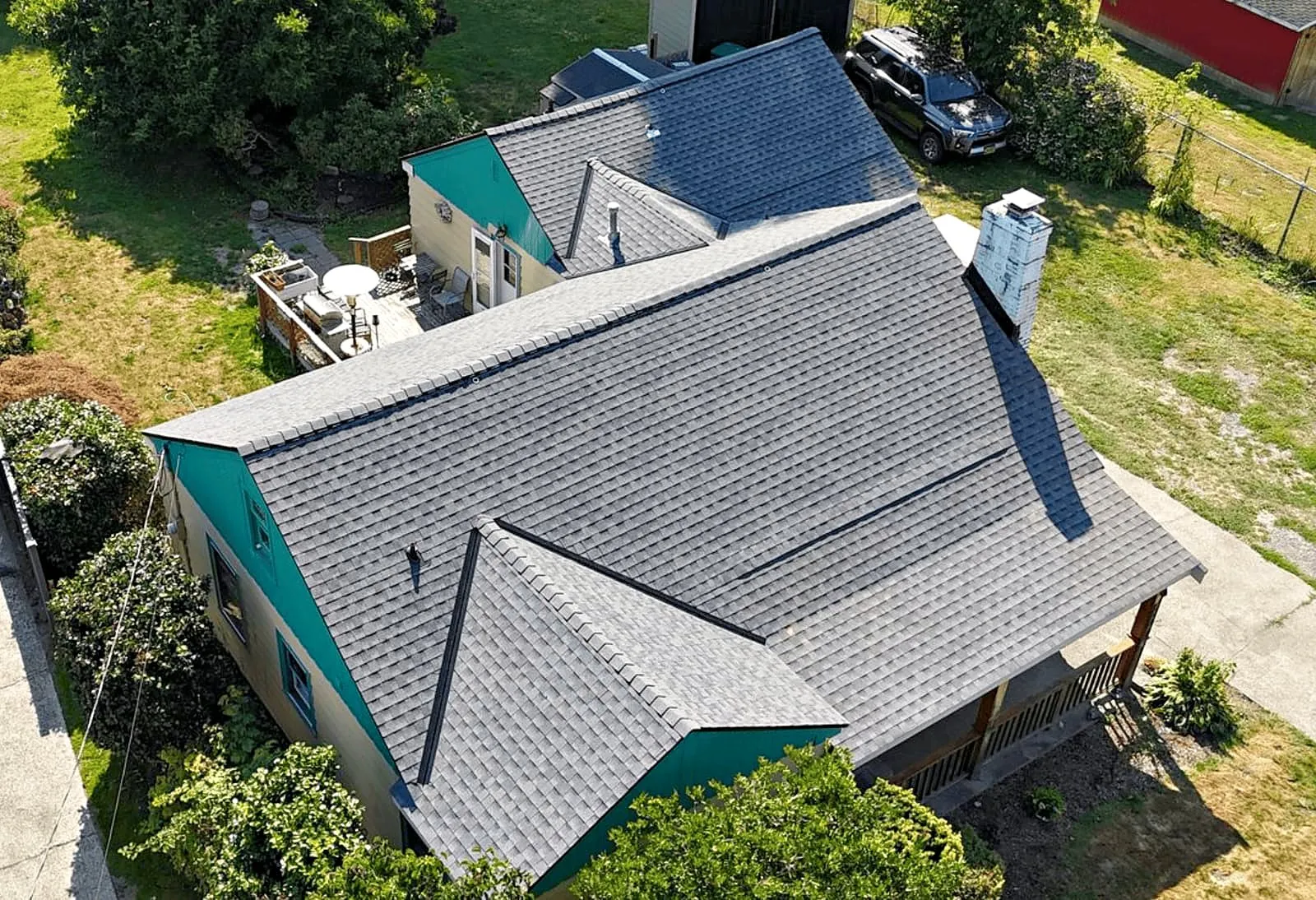
A roof valley is the inside angle where two roof slopes meet. Those slopes funnel water toward one spot, so the gutter below a valley can take a concentrated burst of runoff during heavy rain. If the gutter and outlet are clear and water still spills there, have someone look at how the whole section handles that flow.
Tell the contractor whether the water seems to shoot past the front lip or whether the gutter fills up and spills over. Ask them to consider the roof area feeding the valley, the gutter’s size and slope, and the size and position of the downspout. That gives you a better basis for deciding whether a change to the outlet or gutter layout could help.
5. Water Runs Behind the Gutter or Down the Fascia
The fascia is the board along the roof edge that the gutter typically attaches to. If you see water traveling between the gutter and that board, note exactly where it starts. Persistent staining or peeling paint on the wood around the gutter is also worth documenting. The cause may be the way the roof edge directs water, the way the gutter sits against the fascia, or the condition of the wood it’s attached to.
Ask for the roof edge and gutter attachment to be checked together. If water appears indoors or you see damp areas in the attic, arrange a prompt inspection to trace the source. Our guide to the signs you need a new roof covers which roof and attic clues to look for.
6. Water Pools Where a Downspout Ends
If the downspout is sending out a steady stream but the water collects next to the house, follow the runoff at ground level. Look for an extension that came loose, a splash block that shifted, or a low area where water heads back toward the foundation. If water pools while little comes out of the downspout, mention that when you ask for help, since it can point to an obstruction upstream.
How far the water should travel depends on where you live:
- Portland: for disconnected downspouts, the City’s downspout disconnection guidance calls for discharging water at least 6 feet from a basement and at least 2 feet from a crawl space or slab foundation, with the ground sloping away from the house. The end of the extension must also be at least 5 feet from a neighbor’s property line, 10 feet from buildings on the next property and 3 feet from a public sidewalk.
- Seattle: Seattle Public Utilities says to direct downspout flows at least 5 feet from your foundation, and 10 feet is better, without sending water onto a neighbor’s property or over a steep hill. It also says to coordinate with the Seattle Department of Construction and Inspections on approved discharge points.
- Other cities: check with your city or sewer utility.
Read the full guidance before you change where a downspout drains. Portland’s also covers steep yards and how much landscaped area the water needs.
If a downspout runs into a buried pipe, check before you cap it or reroute it. In Portland, disconnecting to an extension and splash block needs no permit, but changing or replacing stormwater piping generally does, and Environmental Services’ Private Property Drainage Inquiries team can help. In Seattle, capping, repairing or altering a drainage line connected to the public system takes a side sewer permit.
When to Clean, Repair or Replace Your Gutters
Clean them when there’s an identifiable blockage and the gutters are otherwise sound. Have the outlet, elbows and extension checked along with the gutter itself, then watch what happens in the next rain before deciding on more work. Once it’s dry, cleaning a single-story gutter yourself can work, but ladder accidents are a common cause of homeowner injuries, so hire a gutter cleaning service for anything higher.
Repair them when the problem is isolated. A leaking end cap, a loose hanger or a short sagging section may be fixable if the rest of the gutter and the wood behind it are in good shape. Ask what caused the sag and whether the gutter can be set back to a slope that drains.
Replace them if several sections are damaged, connections keep leaking, or a clean, properly sloped system still overflows because the roof sends it more water than the gutter and outlets can handle. Ask the contractor to explain how the proposed layout would solve the specific overflow you’ve seen.
If the roof also needs replacing, get the roof-edge details and gutters into the same written scope. Our step-by-step guide to roof replacement explains what to expect.
Frequently Asked Questions
Is It Normal for Gutters to Overflow in Heavy Rain?
A brief spill in a rare downpour can happen. Overflow that keeps coming back in the same place, or shows up in ordinary rain, means something needs attention, most often debris, a low section or a system too small for the roof.
Why Do Clean Gutters Overflow Only During Heavy Rain?
Because heavy rain can deliver water faster than one spot can move it. A roof valley may concentrate the runoff, a section may sit low, the gutter may be too small for the roof above it, or the downspouts may be too few or too small. Watch where the overflow starts and whether the outlet is flowing. That tells you whether to look at the gutter’s slope, the outlet or the roof layout above it.
Will Gutter Guards Stop My Gutters From Overflowing?
Not always. Guards can reduce the debris that reaches your gutters, but debris can still build up on top of the guard and around roof valleys, so have those spots checked at your next cleaning or inspection. If the overflow comes from a sagging run, a blocked underground drain or the layout of the outlets, that needs its own fix.
Do Overflowing Gutters Mean I Need a New Roof?
Not on their own. Overflow is a reason to find out how the water is moving. If it’s running behind the gutter, the fascia feels soft when a professional checks it, or you notice moisture indoors, an inspection can trace the water to the gutter, the roof edge or another part of the roof.
Can Homze Install Gutters When Replacing My Roof?
Yes. Homze installs optional seamless gutters as part of a roof replacement in Portland and Seattle, on the same written quote rather than as a separate job. With current Homze pricing, they add an estimated $2,300 in Portland and $2,560 in Seattle for open gutters, or $4,900 in Portland and $5,460 in Seattle for covered gutters, on a 2,000 sq ft home. If you’re planning a new roof, book a free in-home estimate, show the estimator where the water spills and where it ends up, and ask how the proposed gutter and downspout layout would handle that spot.
Ready to See What Your Project Would Cost?
Book a free in-home estimate for a written quote. No pressure, no obligation.