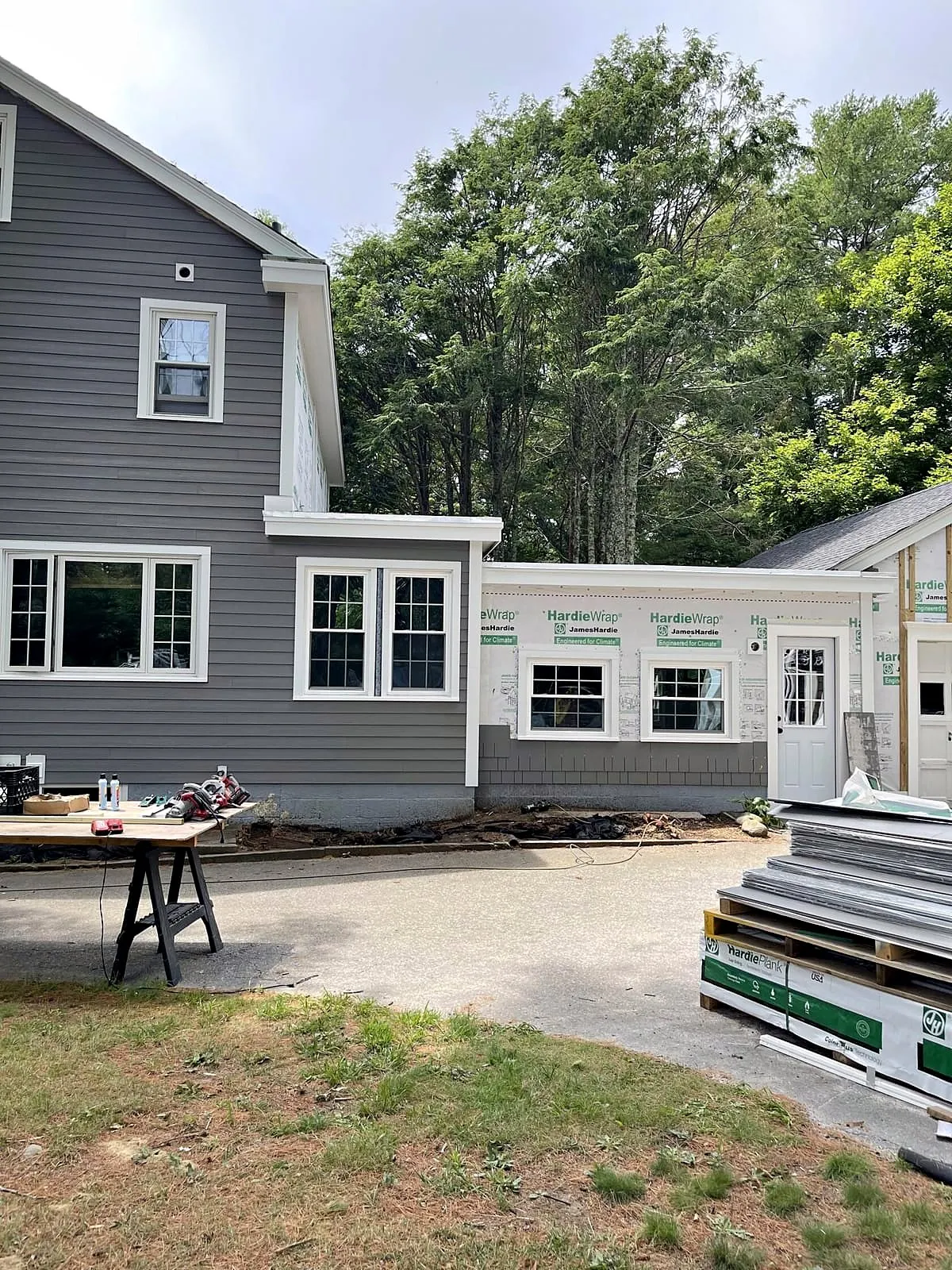
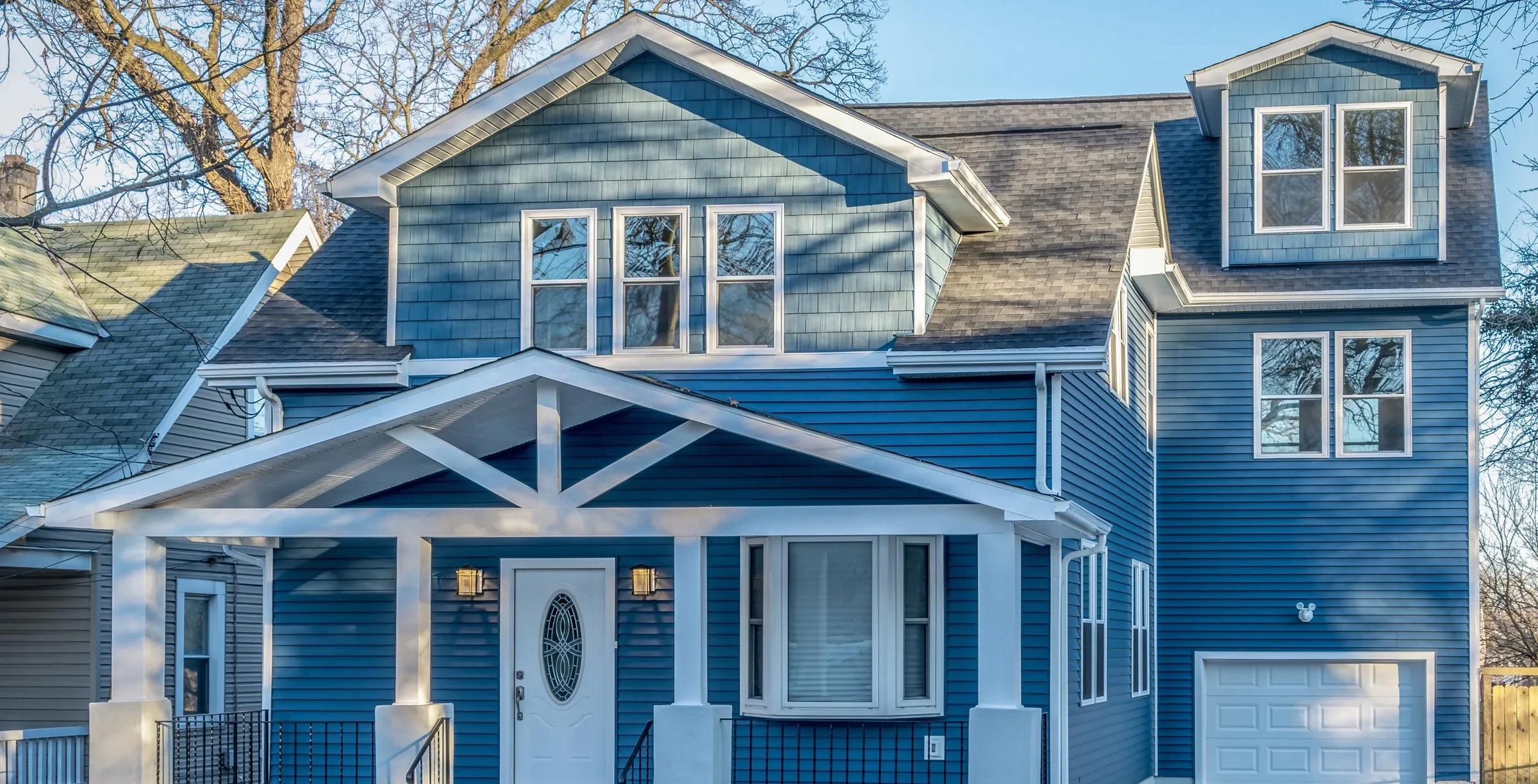
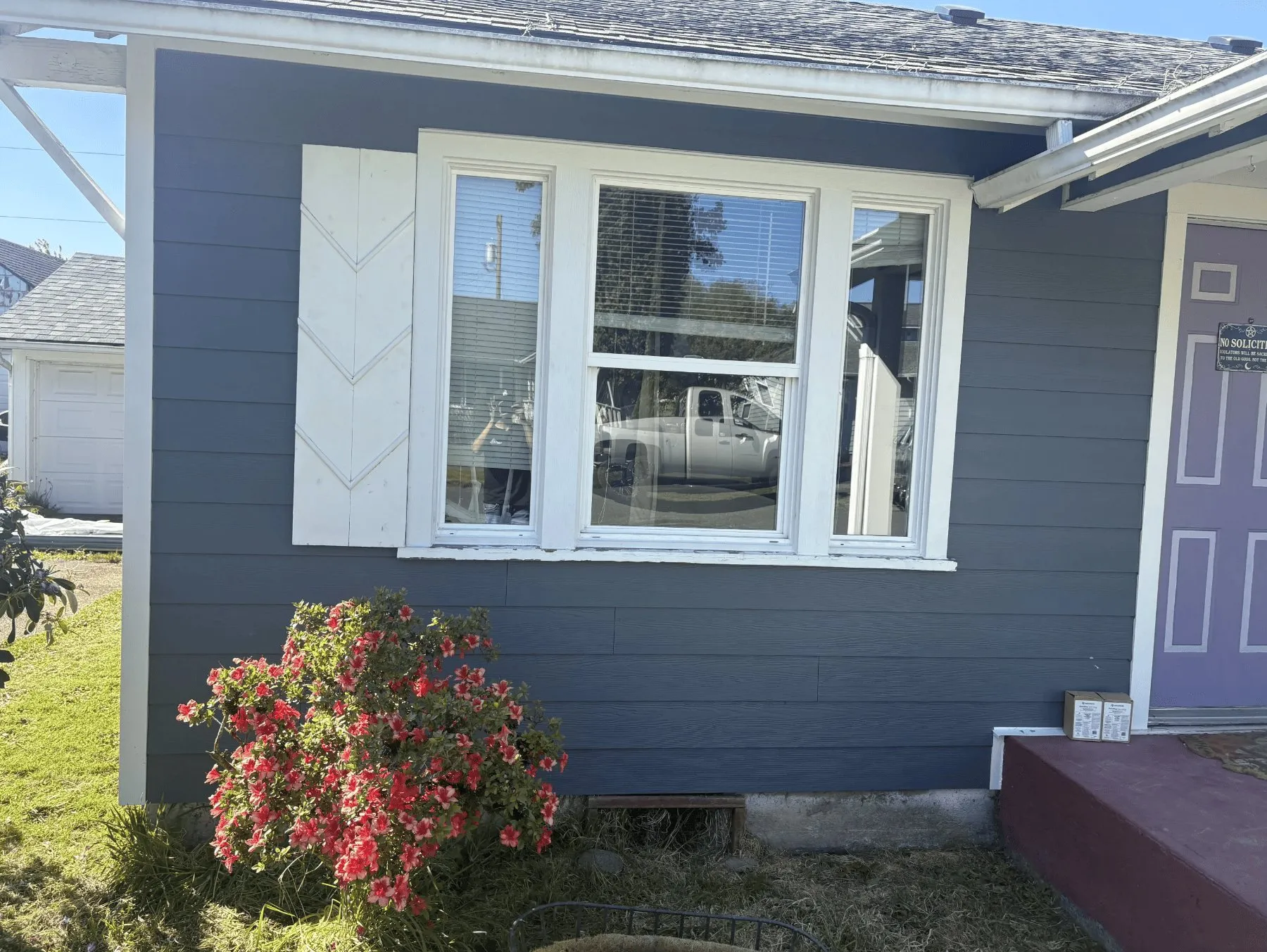
James Hardie Siding Cost in Portland & Seattle
With current Homze pricing, James Hardie plank siding on a 2,000 sq ft two-story home costs an estimated $26,150 to $39,240 in Portland and $28,010 to $42,030 in Seattle primed. Pre-painted siding costs about 15% more.
Prices come from Homze’s current price list and are updated whenever it changes.
How Much Does James Hardie Siding Cost per Square Foot?
Homze prices siding from your home’s living area and its number of stories. On a 2,000 sq ft two-story home, primed plank siding works out to $13.08 to $19.62 in Portland and $14.01 to $21.02 in Seattle per square foot of living area.
Primed James Hardie plank siding on a two-story home, by living area:
| Home size (living area) | Portland | Seattle |
|---|---|---|
| 1,500 sq ft | $19,720 to $29,590 | $21,120 to $31,690 |
| 2,000 sq ft | $26,150 to $39,240 | $28,010 to $42,030 |
| 2,500 sq ft | $32,590 to $48,900 | $34,900 to $52,370 |
| 3,000 sq ft | $39,020 to $58,560 | $41,790 to $62,710 |
Prices differ by area, so each area has its own column.
What Changes the Price
| Factor | Effect on the price |
|---|---|
| One story | 32% less |
| Three stories | 32% more |
| Pre-painted (ColorPlus) plank | 15% more, and no paint job afterward |
| HardiePanel vertical siding | 2% more |
| HardieShingle (shingle/shake) siding | 46% more primed, 74% more pre-painted |
| Painting primed siding | Priced separately; James Hardie requires it within 180 days of installation |
| Hidden water damage, sheathing or framing found once the old siding is off | Repaired at added cost, explained before work starts |
| Trim, access and architectural detail | Set at your free in-home estimate |
Included in Every Price
- Materials and labor
- Removing and disposing of your old siding
- James Hardie’s 30-year limited warranty on the siding, and Homze’s 12-month limited warranty on the installation
These prices are estimates. Your price is set in the written quote you get after your free in-home estimate.
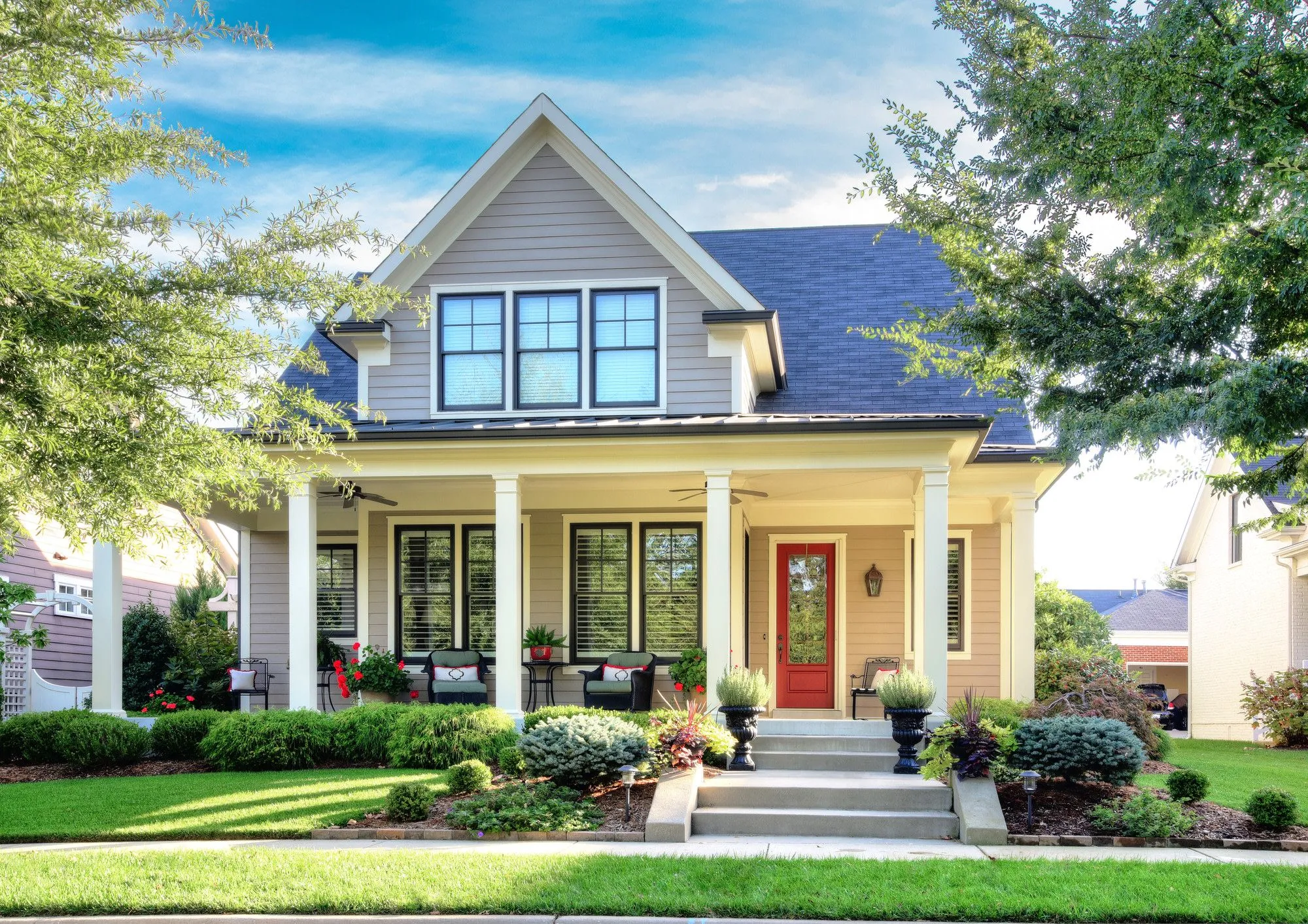
Small, simple jobs come in lower, while larger homes, more stories, shingle/shake styles, heavy trim work, difficult access or hidden damage push the total higher.
What Affects the Cost of James Hardie Siding?
Two similar-looking homes can get very different estimates. Labor complexity, moisture-damage repairs, multi-story walls and detailed trim work have the biggest effect on the final number.
Removing the Old Siding
Removal costs rise when the home has multiple layers of siding, heavy fiber cement or masonry, difficult dumpster access, lead-paint precautions, damaged materials that need careful handling, or suspected asbestos. Homze includes removal and disposal of the old siding in every siding quote. With any other bid, confirm in writing that removal is included, because some lower bids leave it out.
Hidden Water Damage and Structural Repairs
Hidden damage is one of the biggest variables in a Seattle siding job, and older Portland houses often have moisture damage that has to be fixed before new siding goes on. Once the old siding comes off, crews may find rotten sheathing, deteriorated framing, damaged window or door openings, missing or failed flashing, mold or persistent moisture, an inadequate water-resistive barrier, insect damage, or earlier installation mistakes. A standard estimate may not cover extensive hidden repairs unless the damage is already visible, so ask how change orders and extra repair work will be handled before you sign.
House Height and Access
A one-story rectangular house is simpler than a three-story home on a steep lot. Scaffolding, fall protection, limited driveway access, close neighbors, hillsides, restricted parking, narrow side yards and difficult material staging all add labor.
Architectural Complexity
More cuts, corners and transitions take more time. Multiple gables, dormers, bay windows, turrets, decorative bands, mixed siding profiles, board-and-batten sections, shingle accents, extensive window trim, and custom soffit and fascia work all raise the price.
Trim, Soffits and Fascia
Your project may also include window and door trim, corner boards, frieze boards, fascia, soffits, belly bands, porch ceilings, decorative columns and garage trim, and James Hardie makes its own trim boards, soffits and vents. A premium trim package improves the finished look but adds materials and labor.
Painting or a Factory Finish
Field-painted siding needs priming, caulking, masking, prep and multiple finish coats. A factory-applied finish simplifies part of that work but costs more: with Homze, pre-painted plank siding adds $3,940 to $5,910 in Portland and $4,220 to $6,330 in Seattle over primed on a two-story, 2,000 sq ft home. If you go with primed, James Hardie requires the boards to be painted within 180 days of installation, so plan and price the paint job up front.
Insulation and Weather-Barrier Upgrades
With the old siding off, it’s the right time to check the layers behind it. Depending on the home, a contractor may recommend new house wrap, a drainable water-resistive barrier, rainscreen components, continuous exterior insulation, new flashing, air sealing or ventilation corrections. These add upfront cost and improve moisture management.
Permits and Code Requirements
Replacing siding alone usually doesn’t need a building permit in the City of Portland or in Seattle, but historic and design reviews in Portland, structural repairs in Seattle, and the rules of other cities can change that (see the questions below).
How to Get an Accurate Siding Estimate
A price range is best for early budgeting: checking whether the project is realistic, comparing scenarios, seeing whether you may need financing, and preparing questions for contractors, without relying on a national average.
- Build in a buffer for unexpected repairs or upgrades.
- Phase optional upgrades such as soffits or insulation if that helps the budget.
- Ask about financing. Homze offers interest-free and deferred-payment options for well-qualified buyers, on approved credit.
A Hardie plank calculator mostly estimates how many boards you need. A siding cost estimator also accounts for labor, removal, trim, disposal and other project costs.
An in-person visit is still needed for exact measurements, a look at the existing siding, water damage, trim and flashing, final material choices, access conditions, and a detailed written proposal. When you’re ready for an exact price, book a free in-home estimate on our Portland siding replacement or Seattle siding replacement page.
How Much Siding Does My House Need?
Homze’s pricing starts from your home’s living area and number of stories, but contractors calculate materials from exterior wall area, not living space. A 2,000 sq ft house does not have exactly 2,000 sq ft of siding: windows, doors, gables, attached garages, extra stories and architectural details all change the wall area to cover. A 2,000 to 2,500 sq ft home typically needs about 2,500 to 3,000 sq ft of siding coverage once trim and waste are included.
A compact two-story home and a sprawling one-story home with the same interior square footage can need very different amounts of siding. The two-story home may sit on a smaller footprint but needs more work at height. Large windows mean fewer siding boards but more labor-intensive cuts and flashing.
For a rough figure of your own:
- Measure the height and width of each wall.
- Multiply height by width for each wall and add them up.
- Add 10 to 15% for gables and waste.
- Subtract doors and large windows if you want a closer number.
A contractor takes exact measurements during the in-home estimate, so treat your number as a starting point.
Why James Hardie Works Well in Portland and Seattle
Portland International Airport averages about 37 inches of rain a year, with measurable rain on 157 days, and Sea-Tac Airport averages about 39 inches, with measurable rain on 156 days, according to NOAA’s 1991 to 2020 climate normals. Seattle homes deal with rain, damp, wind, shade and seasonal temperature swings.
James Hardie engineers its siding by climate zone through its Engineered for Climate approach, and its ZIP code list puts Portland, Vancouver, Seattle and Kent in its HZ10 zone, the product line made for high humidity and heavy rainfall. James Hardie states that its fiber cement siding is water resistant, does not attract pests such as termites, and is noncombustible. It also resists rot, UV fading, woodpeckers, warping and temperature swings. It looks like wood while avoiding much of natural wood’s maintenance, comes in lap siding, shingles, panels, vertical designs and matching trim, and offers dozens of factory colors through ColorPlus Technology. With professional installation and basic care, it lasts 30 to 50 years or longer.
James Hardie backs its fiber cement siding with a 30-year non-prorated limited warranty, and its ColorPlus finishes with a 15-year limited warranty that covers paint and labor.
Even so, durable siding still depends on correct flashing, clearances, water-resistive barriers and installation. Hardie siding needs a crew that knows the product: James Hardie’s installation instructions set everything from the nails to the flashing and clearances, and they warn that not following them can affect warranty coverage.
James Hardie vs Vinyl and Wood: Cost and Lifespan
| Siding | Typical lifespan | Fire and moisture resistance |
|---|---|---|
| James Hardie fiber cement | 30 to 50+ years | Excellent |
| Vinyl | 20 to 30 years | Low |
| Natural wood | 15 to 25 years | Poor |
| Engineered wood | 20 to 30 years | Moderate |
- Vinyl usually has the lowest upfront price, but the cheapest material is not automatically the best long-term choice. Product quality, exposure, appearance and installation all matter.
- James Hardie fiber cement is a mid-to-premium choice. It costs more than entry-level vinyl and gives you a durable, low-maintenance exterior in a wide range of styles.
- Cedar has an authentic natural look but needs more regular maintenance. Material grade, staining or painting, rainscreen details and skilled labor make it one of the more expensive Seattle options.
- Engineered wood offers a wood-like look with a different cost and maintenance profile from cedar or fiber cement.
- Metal and specialty cladding can cost considerably more because of material costs, custom fabrication and installation complexity.
Homze installs James Hardie siding only. Compared with vinyl, fiber cement generally offers greater fire resistance, a more substantial look and strong durability. It costs more up front, and it tends to earn more of that back at resale. Whether Hardie is right for you depends on how long you plan to stay, your maintenance preferences, your home’s style and weather exposure, your budget, your neighborhood, and the quality of installation available. Our guide to whether James Hardie siding is worth it goes deeper, and the best siding for Northwest homes takes a closer look at each material.
What Should a James Hardie Siding Quote Include?
A detailed proposal should spell out:
- On-site measurement and consultation
- Siding brand, product line, profile, texture and exposure
- Estimated siding quantity
- Removal and disposal of the old siding
- Wall preparation, water-resistive barrier and flashing details
- Trim material, soffit and fascia work
- Caulking, sealants, and painting or finish, including paint if you don’t choose ColorPlus pre-finished siding
- Structural repairs and the change-order process
- Permit responsibility
- Site protection and cleanup
- The installer’s and the manufacturer’s warranties in writing (James Hardie backs its siding with a 30-year limited warranty, and Homze backs the installation with a 12-month limited warranty)
- Payment schedule and project timeline
- What is excluded from the price
In Oregon, the Construction Contractors Board also recommends putting it all in a written contract: the contractor’s CCB license number, the specific materials, start and completion dates, the total price and payment schedule, the permits needed and who gets them, and a rule that changes happen only through signed, written change orders.
Don’t compare bids on the final price alone. One proposal may include full trim replacement, new flashing, painting, disposal and repair allowances while another leaves them out.
How to Lower Your Siding Cost Without Sacrificing Quality
The cheapest proposal can get expensive if the installation fails or essential work is left out. Instead:
- Choose primed siding for the lower siding price, and count the paint job it needs within 180 days when you compare.
- Pick plank or panel. Shingle/shake siding costs the most of the three styles.
- Use one primary siding profile. Mixing lap, shingles, panels and decorative elements adds labor and waste.
- Keep the trim design practical. A clean, well-planned trim package can look great without heavy custom detail.
- Address damage early. Waiting lets moisture spread into sheathing, framing, windows and interior finishes.
- Compare complete scopes so every contractor is pricing similar materials, removal, trim, weather barriers, painting, disposal and repairs.
- Coordinate related exterior work. Doing roofing, gutters, windows, painting and siding in the right order avoids duplicate labor and damage to new materials. Roof-to-wall flashing affects both roof and siding, gutters may need to come down during fascia work, and new siding is the right moment to inspect window flashing and trim, and to plan one color scheme for siding, trim and doors.
- Insulate the walls. Re-siding is a natural time to do it. Around Portland, if your walls have little or no insulation, ask Energy Trust of Oregon whether you qualify for its wall insulation incentive. It covers homes heated through a participating utility, such as PGE, Pacific Power or NW Natural, with existing wall insulation of R-4 or less.
- Start with a realistic estimate so you can spot bids that look unusually low or high.
What to Expect During Siding Installation
A full replacement usually moves through these stages:
- Consultation and measurements
- Product and color selection: style, profile, texture, trim and color
- Preconstruction: materials ordered, access planned, paperwork completed
- Removal of the old siding
- Inspection and repair of damaged sheathing, framing, flashing or trim
- Weather protection: water-management layers installed or repaired
- New siding and trim installation
- Painting and finishing of field-painted materials, joints and penetrations
- Cleanup, final review and corrections
For more detail on each stage, read our siding installation process guide.
How Long Does Siding Installation Take?
Many full-home projects take about one to three weeks of active construction, and James Hardie puts a typical average-sized home at 7 to 14 days of installation. Home size, number of stories, siding material and profile, trim, weather, structural repairs, painting, material availability, permits or inspections, crew size and site access can stretch the timeline. Seattle rain doesn’t stop all siding work, but the crew has to protect exposed walls and manage moisture carefully throughout. James Hardie’s instructions also call for keeping the boards stored flat and under cover, because siding installed wet can shrink at the butt joints.
Is It Time to Replace Your Siding?
Watch for these signs:
- Cracks, warping or loose boards. These often point to moisture damage underneath.
- Rot or soft spots. Wood siding is especially vulnerable in Portland’s rain.
- Paint that keeps peeling. If you repaint often, the siding may no longer protect the house.
- Rising energy bills. Damaged siding can let air leak in and out.
- Mold, mildew or water stains. These suggest water is getting behind the siding.
How Much Does Siding Repair Cost?
Repair costs vary widely, from a few boards to broad water damage across several stories. Repairs are hard to price online because the contractor has to find out how much siding must come off, whether matching material is available, whether water got behind the siding, whether sheathing or framing is damaged, and whether repainting, flashing, trim or scaffolding is involved.
Damage to one or two boards, or to a small area, may be repairable. Widespread rot, warping, moisture damage or simply old siding usually makes full replacement the better long-term value, and widespread cracking, failed flashing, repeated leaks or many patched areas can make it the more economical choice.
How to Choose a Siding Contractor in Portland and Seattle
- Experience installing siding in your area.
- A license in your state. In Oregon, the Construction Contractors Board’s license search shows whether a contractor is licensed and bonded, whether it filed proof of liability insurance, and any complaints in the past 10 years. Homze’s license is CCB 239804. In Washington, the Department of Labor & Industries’ Verify a Contractor tool shows any contractor’s registration, bond and insurance. Homze’s registration is HOMZEL*786KQ.
- James Hardie expertise. Installers who work with Hardie products regularly know the manufacturer’s installation requirements, which protects your warranty.
- Reviews and past work. Check online reviews, testimonials and project photos.
- Warranties. Look for both a manufacturer warranty and a workmanship guarantee.
Questions to Ask a Siding Contractor
- Are you licensed and insured in my state?
- Do you regularly install the exact siding product I chose?
- Who will supervise the project?
- How will you protect the house if it rains?
- What water-resistive barrier will you use?
- How will you flash windows, doors and roof intersections?
- What happens if you find hidden rot?
- Can I see recent local projects?
Permits, painting, warranties and exclusions should already be spelled out in the written estimate. A professional contractor gives you a clear scope of work, not a one-line price.
Frequently Asked Questions
Why Is James Hardie Siding More Expensive Than Vinyl?
It is engineered for durability, weather resistance and a long service life. You pay more up front and get a siding that holds up longer and helps resale value.
Does New Siding Increase Home Value?
New siding can improve curb appeal, fix visible deterioration and make a home more attractive to buyers. In the 2025 Cost vs. Value Report’s national averages, fiber cement siding replacement recouped 113.7% of its cost at resale and vinyl recouped 96.5%. Your own return depends on project cost, neighborhood, material, installation quality and the housing market.
What Is the Cheapest Siding to Replace?
Vinyl, in most cases. The 2025 Cost vs. Value Report put the national average job cost at $17,950 for vinyl siding replacement and $21,485 for fiber cement. James Hardie lists its plank siding as more expensive than vinyl and less expensive than brick.
Does James Hardie Siding Come Pre-Painted?
Yes. The ColorPlus line has a baked-on factory finish that lasts longer than paint applied after installation. Homze installs Hardie siding either primed or pre-painted, and the tables above price both.
Can I Install James Hardie Siding Myself?
It’s not recommended, and James Hardie itself says a full siding project is best left to pros who know fiber cement. Proper installation takes training and specific tools, and it determines both the warranty and how well the wall sheds water.
Can New Siding Go Over My Old Siding?
Usually not on a Portland home. James Hardie’s instructions call for its siding to be fastened to studs or to solid sheathing such as 7/16 inch OSB, and leaving the old siding on hides any rot behind it. Every Homze siding quote includes removing and disposing of your old siding.
Can New Siding Lower My Energy Bills?
It can help. New siding with a proper weather barrier and insulation reduces air leaks, and many homeowners notice a more comfortable house and potentially lower heating and cooling costs. In Portland, adding insulation to an existing home doesn’t need a building permit.
Do I Need a Permit to Replace Siding in Portland and Seattle?
Usually not for the siding alone. The City of Portland lists replacing or repairing siding that isn’t required to be fire-resistant among the outside projects that don’t need a building permit, though the work still has to meet code. A property under a historic or design review condition can still need approval.
In Seattle, the Seattle Department of Construction and Inspections (SDCI) says a permit is not required to replace roofing and siding if no structural changes are made. Its rules also say any work on load-bearing supports, changes to the building envelope, or work that reduces fire resistance needs a permit no matter how small, and homes in environmentally critical areas follow different rules. So if rotted framing turns up behind the old siding and has to be rebuilt, a permit can come into play mid-project.
Suburbs and other cities, such as Beaverton, run their own building departments and set their own rules, so have your contractor confirm the rules for your address and scope before work starts.
Can a Handyman Replace My Siding in Oregon?
Only one with an Oregon CCB license. The Construction Contractors Board requires a license for any business that does construction, remodeling or repair work. If you hire an unlicensed contractor, you lose the CCB’s help with disputes and the chance to recover damages through the contractor’s bond.
Does New Siding in Oregon Need a Rainscreen Gap?
Oregon’s code requires a way for water to drain out from behind the siding. The 2023 Oregon Residential Specialty Code (section R703.1.1) calls for at least 1/8 inch of space between the weather barrier and the siding, formed with furring strips, a drainage mat or drainage board. A weather barrier built to drain, one that meets the code’s 75% drainage efficiency test under ASTM E2273, can take the place of the gap. A 2026 edition of the code is phasing in through March 2027, so ask which edition a bid follows.
When Is the Best Time to Replace Siding in Portland and Seattle?
Siding can be installed most of the year when the contractor manages weather exposure properly. July and August are the driest months in both cities. At Portland International Airport they get about half an inch of rain each, against more than 5 inches in each of November, December and January (NOAA 1991 to 2020 normals). At Sea-Tac they average 0.60 and 0.97 inches, against more than 5.5 inches in each of November, December and January. Spring and summer are the most popular seasons. Fall often brings faster scheduling and drier weather than winter. Winter installs are possible, but they can come with weather delays and extra protection for open walls. If you choose primed siding for a wet-season job, James Hardie allows up to 180 days to paint it and says never to paint wet siding, so the paint can wait for a dry stretch.
Ready to See What Your Project Would Cost?
Book a free in-home estimate for a written quote. No pressure, no obligation.