Best Siding for Northwest Homes: Hardie vs Vinyl
For most homes in Portland, Seattle and the rest of the Pacific Northwest, James Hardie fiber cement siding is the best overall choice. It offers the strongest moisture resistance, durability and long-term performance in a wet climate. Engineered wood with proper sealing and high-quality vinyl can also work, while traditional wood siding takes the most upkeep to survive here.
Why Northwest Weather Is Hard on Siding
Portland International Airport averages measurable rain on 157 days a year and Sea-Tac on 156, according to NOAA’s 1991 to 2020 climate normals. Homes here deal with:
- Frequent rain throughout the year
- High humidity with limited drying time
- Moss, algae and mildew growth
- Occasional wind-driven rain
- Seasonal temperature swings
Siding that absorbs moisture or depends on frequent repainting tends to fail early here, which can lead to rot, warping, mold and expensive repairs.
1. James Hardie Fiber Cement Siding: Best Overall
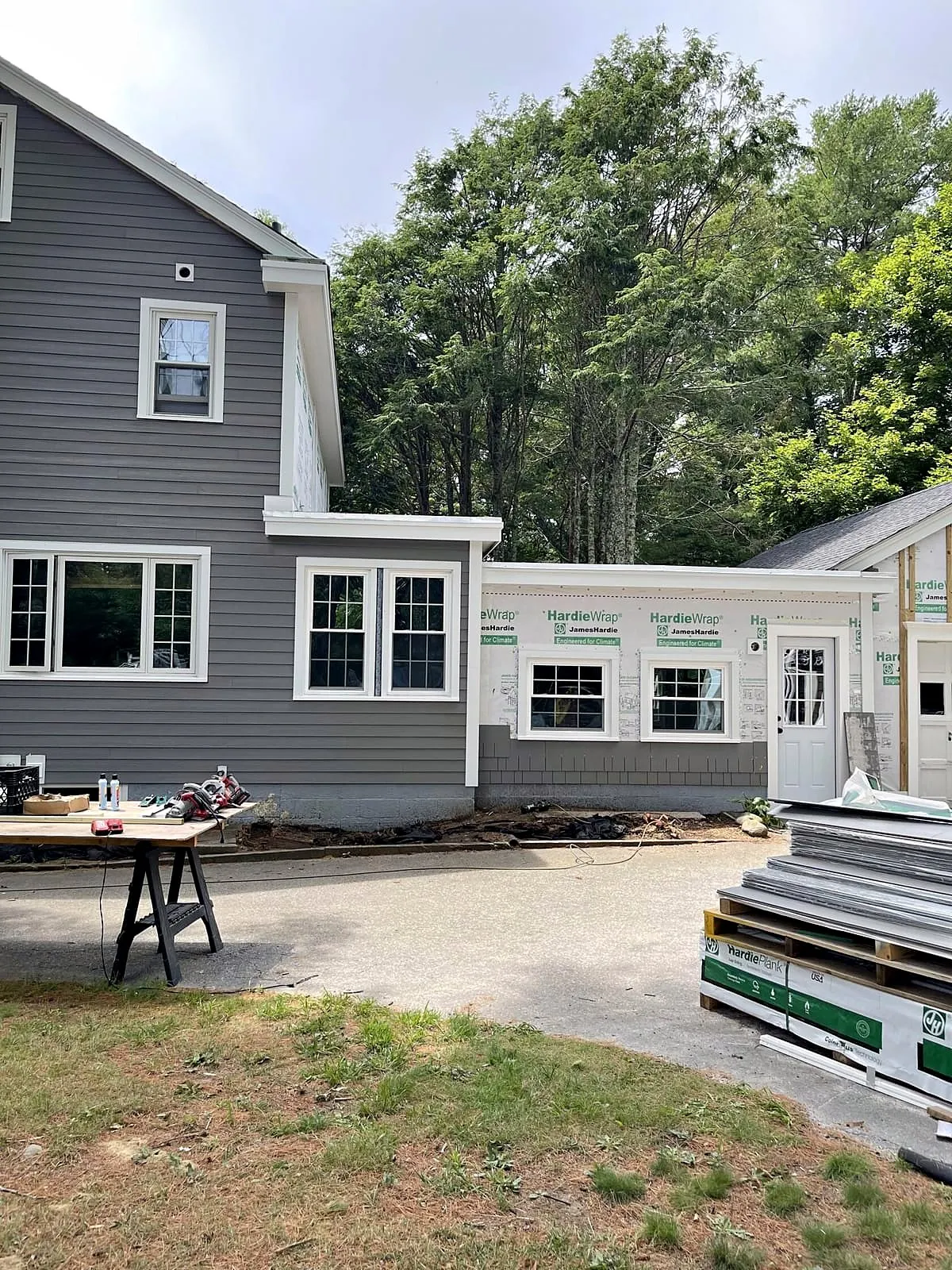
James Hardie pioneered modern fiber cement siding and engineers it by climate zone. Its ZIP code list puts Portland and Seattle in its HZ10 zone, the product line made for high humidity and heavy rainfall. Homze installs James Hardie siding because it is engineered for climates like ours.
Pros:
- Highly resistant to moisture and rot
- Resists warping and swelling
- Resists mold, mildew and pests
- Non-combustible
- Available in lap, panel and shingle styles
- ColorPlus Technology offers a wide range of factory-applied colors and cuts down on repainting
- Backed by a 30-year non-prorated limited warranty from James Hardie, plus a 15-year limited warranty on ColorPlus finishes
Cons:
- Higher upfront cost than vinyl
- Heavier, so it needs professional installation
- Primed boards must be painted within 180 days of installation, under James Hardie’s instructions
Best for: homeowners who want long-lasting protection with minimal upkeep. With professional installation, James Hardie siding typically lasts 30 to 50 years or longer.
2. Engineered Wood Siding: Moderate Performance
Engineered wood can work in the Northwest if it is properly installed and maintained.
Pros:
- Looks like real wood and is more durable than it
- Lighter than fiber cement and easier to install
- Resists moisture and pests
Cons:
- Needs consistent maintenance
- Vulnerable to moisture if the coating fails
- May not be as durable as fiber cement in extreme conditions
Best for: homeowners who want the wood look without all of wood’s upkeep, and who are committed to ongoing maintenance.
3. Vinyl Siding: Budget-Friendly
Vinyl resists moisture on its surface but has limits in a climate this wet.
Pros:
- Lowest upfront cost
- No painting required and minimal surface maintenance
- Wide range of styles and colors
Cons:
- Can trap moisture behind the panels
- Less impact-resistant and less durable than fiber cement
- Can crack, warp or fade over time
- Shorter lifespan
Best for: budget-focused projects where lower initial cost matters more than long-term durability. Vinyl can work when installed correctly, but it doesn’t match the longevity of fiber cement.
4. Cedar and Traditional Wood Siding: Hardest to Maintain
Cedar and other wood siding is common on older Portland homes and has real appeal, but it struggles in wet conditions.
Pros:
- Natural beauty and warmth
- Renewable material
- Good insulator
Cons:
- Needs staining or sealing every 2 to 5 years in Portland’s humidity and rain
- High risk of rot and insect damage without upkeep
- Higher lifetime maintenance costs
Best for: homeowners who love the look of natural wood and are willing to keep up with it. For long-term performance in Northwest weather, it is generally not the recommended choice.
Siding Materials Compared
| Material | Durability | Typical lifespan | Maintenance | Weather resistance | Upfront cost (relative) | Curb appeal |
|---|---|---|---|---|---|---|
| Fiber cement (James Hardie) | Excellent | 30 to 50+ years | Low | Excellent | $$$ | High |
| Cedar wood | Good | 15 to 25 years | High | Moderate | $$$ | Very high |
| Vinyl | Moderate | 20 to 30 years | Very low | Moderate | $ | Moderate |
| Engineered wood | Good | 20 to 30 years | Moderate | Good | $$ | High |
James Hardie vs Vinyl Siding: Which Is Better Here?
These two are the most common comparison for Northwest homeowners planning a replacement.
| Feature | James Hardie siding | Vinyl siding |
|---|---|---|
| Moisture resistance | Excellent | Moderate |
| Lifespan | 30 to 50+ years | 20 to 30 years |
| Mold and rot resistance | Very high | Moderate |
| Fire resistance | Non-combustible | Combustible |
| Performance in Northwest weather | Excellent | Fair |
| Resale value impact | High | Moderate |
With current Homze pricing, primed James Hardie plank siding on a 2,000 sq ft two-story home costs an estimated $26,150 to $39,240 in Portland and $28,010 to $42,030 in Seattle. Vinyl costs less up front, but Hardie usually delivers better long-term value through its durability and lower upkeep. The 2025 Cost vs. Value Report’s national averages put vinyl siding replacement at $17,950 and fiber cement at $21,485, with fiber cement recouping 113.7% of its cost at resale against 96.5% for vinyl. See the full siding cost guide for project-level pricing.
Choose James Hardie if you want long-term durability, strong moisture resistance, higher resale value and fewer climate-related problems. Vinyl can suit a tight budget, but it carries more long-term risk in wet conditions.
Our Recommendation
For most Northwest homeowners, James Hardie fiber cement offers the best mix of weather resistance, longevity and low maintenance, plus strong manufacturer warranties when professionally installed. If you’re weighing the higher upfront price, our guide to whether James Hardie siding is worth it walks through cost, lifespan and resale value.
To see what Hardie would cost on your house, book a free in-home estimate on our James Hardie siding page for a written quote.
Frequently Asked Questions
What Siding Holds Up Best in Northwest Rain?
James Hardie fiber cement. It is engineered to handle moisture, rain and temperature swings, which makes it one of the best choices for Portland and Seattle.
Is James Hardie Siding More Expensive Than Vinyl?
Yes. It has a higher upfront cost, but its durability, longer lifespan and lower maintenance make it more cost-effective over time.
Can I Paint James Hardie Siding?
Yes. ColorPlus Technology gives you a baked-on color that lasts longer, but you can repaint James Hardie siding if you want a change. James Hardie recommends 100% acrylic topcoats and says not to use stain or oil-based paint.
Which Siding Needs the Least Maintenance?
Vinyl needs the least day-to-day maintenance. James Hardie fiber cement pairs low maintenance with much better longevity and weather resistance.
Is Vinyl Siding a Bad Choice for the Pacific Northwest?
It’s a trade-off more than a bad choice. Vinyl costs the least up front, needs no painting and can work when it’s installed correctly. On the other side, James Hardie points out that vinyl can melt and burn and that its fiber cement is up to five times thicker, and vinyl earns back less at resale: 96.5% of its cost in the 2025 Cost vs. Value Report’s national averages, against 113.7% for fiber cement.
How Do I Prevent Mold and Moss on Siding?
Keep the walls clean and give them a chance to dry. James Hardie recommends rinsing its siding every 6 to 12 months with a garden hose and a soft brush, keeping shrubs and trees trimmed back from the walls, and keeping gutters clear. Skip the pressure washer and harsh chemicals such as bleach, which can damage the finish.
Can I Install Fiber Cement Siding Myself?
James Hardie says a full siding project is best left to pros who know fiber cement. The boards are heavy, cutting them calls for the right saw with dust collection, and not following the installation instructions can affect the warranty.
Does Siding Choice Affect Home Value?
Yes. Durable siding like James Hardie fiber cement can improve curb appeal and resale value.
Ready to See What Your Project Would Cost?
Book a free in-home estimate for a written quote. No pressure, no obligation.