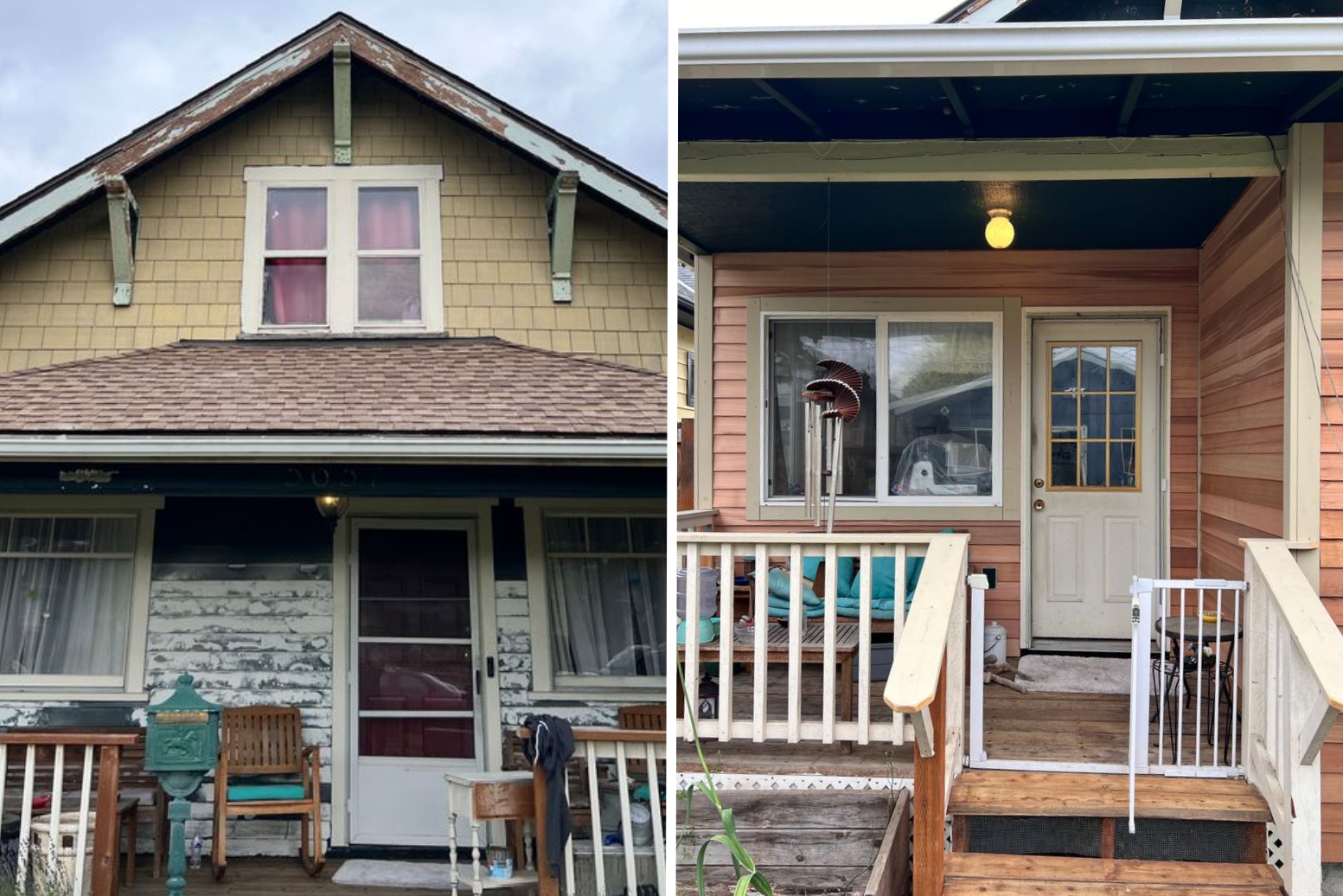
Homes in Portland and Seattle face constant exposure to rain, moisture, and humidity. Over time, these conditions take a toll on exterior siding, often causing damage that isn’t immediately obvious.
Ignoring early warning signs can lead to costly structural repairs, mold growth, and energy loss. This guide explains the most common signs your home may need new siding — and why Pacific Northwest homeowners should act early.
Quick Answer:
Common signs your home in Portland or Seattle needs new siding include visible rot, warping, cracking, peeling paint, mold or moss growth, higher energy bills, and moisture damage around windows or doors. In the Pacific Northwest, these issues often indicate siding failure caused by prolonged moisture exposure.
Common signs your home in Portland or Seattle needs new siding include visible rot, warping, cracking, peeling paint, mold or moss growth, higher energy bills, and moisture damage around windows or doors. In the Pacific Northwest, these issues often indicate siding failure caused by prolonged moisture exposure.
Why Roofing Material Choice Matters in the Pacific Northwest
Siding in Portland and Seattle must withstand:
Even durable siding materials can fail prematurely if they’re outdated, improperly installed, or not designed for wet climates.
- Heavy rainfall and constant moisture
- High humidity with limited drying time
- Moss, algae, and mildew growth
- Wind-driven rain during storms
- Seasonal temperature changes
Even durable siding materials can fail prematurely if they’re outdated, improperly installed, or not designed for wet climates.
Most Common Signs You Need New Siding
1. Rotting or Soft Siding Panels
If siding feels soft, crumbles, or shows visible rot, moisture has already penetrated the material. This is especially common with older wood or composite siding in Portland and Seattle.
Rotting siding is a serious issue that often means moisture has reached the home’s framing.
Rotting siding is a serious issue that often means moisture has reached the home’s framing.
2. Warping, Buckling, or Cracking
Siding that appears warped, swollen, or cracked is often a sign of long-term water absorption.
In the Pacific Northwest, repeated moisture exposure causes materials like wood and vinyl to expand and contract, leading to visible deformation.
In the Pacific Northwest, repeated moisture exposure causes materials like wood and vinyl to expand and contract, leading to visible deformation.
3. Peeling Paint or Frequent Repainting
If exterior paint is peeling, bubbling, or fading quickly, the siding underneath may be failing.
Well-performing siding should hold paint for many years. Frequent repainting is often a warning sign of trapped moisture or material breakdown.
Well-performing siding should hold paint for many years. Frequent repainting is often a warning sign of trapped moisture or material breakdown.
4. Mold, Mildew, or Moss Growth
Moss or green staining on siding is common in Portland and Seattle — but excessive growth may indicate moisture retention behind the panels.
Persistent mold or mildew can signal hidden water damage that requires siding replacement, not just cleaning.
Persistent mold or mildew can signal hidden water damage that requires siding replacement, not just cleaning.
5. Water Stains Around Windows and Doors
Discoloration, staining, or bubbling near windows and doors often points to siding failure or poor flashing.
These areas are especially vulnerable to wind-driven rain in the Pacific Northwest.
These areas are especially vulnerable to wind-driven rain in the Pacific Northwest.
6. Higher Energy Bills or Drafts
Old or damaged siding can allow air and moisture to enter the home, reducing insulation performance.
If your heating or cooling costs have increased without explanation, failing siding may be contributing to energy loss.
If your heating or cooling costs have increased without explanation, failing siding may be contributing to energy loss.
Why James Hardie Siding Is a Smart Upgrade in Portland and Seattle
When replacing siding in the Pacific Northwest, material choice matters.
James Hardie® fiber cement siding is engineered to perform in wet, rainy climates and offers:
For many Portland and Seattle homeowners, upgrading to James Hardie siding prevents repeat issues caused by moisture-sensitive materials.
James Hardie® fiber cement siding is engineered to perform in wet, rainy climates and offers:
- Superior moisture resistance
- No rot or warping
- Resistance to mold, pests, and fire
- Long-term durability with lower maintenance
- Excellent curb appeal and resale value
For many Portland and Seattle homeowners, upgrading to James Hardie siding prevents repeat issues caused by moisture-sensitive materials.
Frequently Asked Questions
How often should siding be replaced in Portland and Seattle?
Most siding lasts 20–40 years, but moisture damage in the Pacific Northwest can shorten lifespan if materials aren’t designed for wet climates.
Most siding lasts 20–40 years, but moisture damage in the Pacific Northwest can shorten lifespan if materials aren’t designed for wet climates.
Can damaged siding cause mold inside the home?
Yes. Failing siding can allow moisture into wall cavities, leading to mold growth and indoor air quality issues.
Yes. Failing siding can allow moisture into wall cavities, leading to mold growth and indoor air quality issues.
Is peeling paint always a sign I need new siding?
Not always, but frequent peeling often indicates moisture problems beneath the siding that should be professionally inspected.
Not always, but frequent peeling often indicates moisture problems beneath the siding that should be professionally inspected.
Can siding damage be repaired instead of replaced?
Minor damage may be repairable, but widespread rot, warping, or moisture intrusion usually requires full siding replacement.
Minor damage may be repairable, but widespread rot, warping, or moisture intrusion usually requires full siding replacement.
Is James Hardie siding better for rainy climates?
Yes. James Hardie fiber cement siding is specifically engineered for moisture-heavy environments like Portland and Seattle.
Yes. James Hardie fiber cement siding is specifically engineered for moisture-heavy environments like Portland and Seattle.
Concerned About Your Home’s Siding?
Get a professional siding inspection and explore James Hardie® siding options built for Portland and Seattle weather.