Choosing the right roofing material in Portland and Seattle is critical. The Pacific Northwest’s climate — frequent rain, high humidity, moss growth, and seasonal windstorms — puts more stress on roofs than in drier regions.
Not all roofing materials perform equally in wet environments. This guide explains which roofing materials work best in the Portland and Seattle metro areas, how they compare, and how homeowners can make a long-lasting choice.
Quick Answer:
The best roofing materials for Portland and Seattle are architectural asphalt shingles, metal roofing, and certain flat roofing systems. These materials perform well in wet climates, resist moss growth, and provide strong long-term durability when professionally installed.
The best roofing materials for Portland and Seattle are architectural asphalt shingles, metal roofing, and certain flat roofing systems. These materials perform well in wet climates, resist moss growth, and provide strong long-term durability when professionally installed.
Why Roofing Material Choice Matters in the Pacific Northwest
Roofing materials in the Pacific Northwest must handle:
Materials that perform well in dry climates may fail early in Portland or Seattle if they lack moisture resistance or proper installation support.
- Constant moisture exposure
- Moss and algae growth
- Wind-driven rain
- Limited drying time between storms
Materials that perform well in dry climates may fail early in Portland or Seattle if they lack moisture resistance or proper installation support.
Architectural Asphalt Shingles (Most Popular Choice)
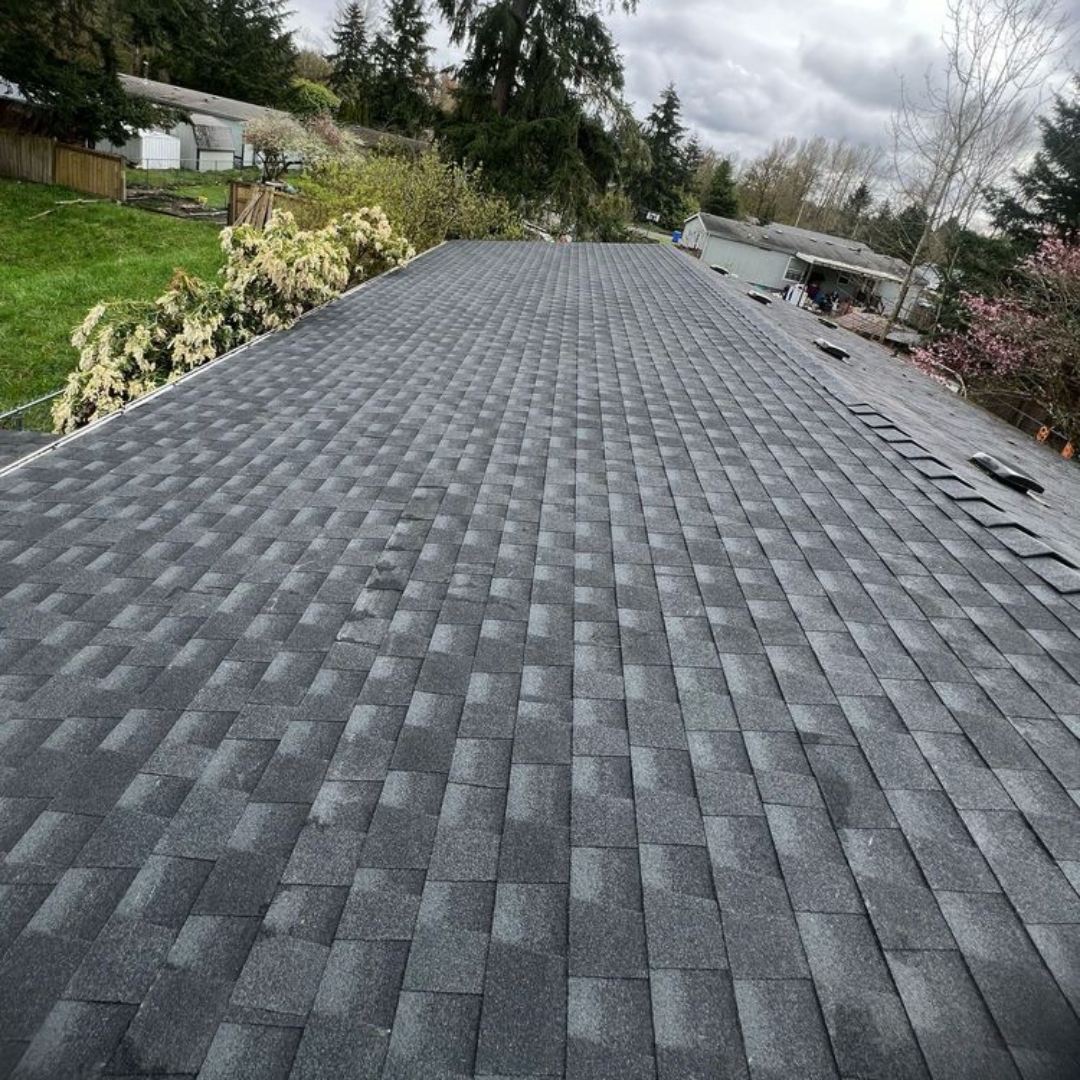
Architectural (dimensional) asphalt shingles are the most common and cost-effective roofing option in the region.
Why they work well:
When installed by a GAF Master Elite® Contractor like Homze, homeowners may qualify for up to a 50-year warranty on eligible systems.
Why they work well:
- Designed to shed water efficiently
- Thicker than standard 3-tab shingles
- Better wind resistance
- Compatible with enhanced GAF roofing systems
When installed by a GAF Master Elite® Contractor like Homze, homeowners may qualify for up to a 50-year warranty on eligible systems.
Metal Roofing (Best for Longevity)
Metal roofing is an excellent choice for homeowners prioritizing durability and low maintenance.
Advantages in Portland & Seattle:
Metal roofs have a higher upfront cost but offer outstanding long-term value in wet climates.
Advantages in Portland & Seattle:
- Excellent water shedding
- Resistant to moss and algae
- Long lifespan (40–70 years)
- Energy-efficient and recyclable
Metal roofs have a higher upfront cost but offer outstanding long-term value in wet climates.
Flat and Low-Slope Roofing Systems
Flat and low-slope roofs are common on modern homes and additions.
Best-performing systems include:
These systems provide strong waterproofing when properly installed and maintained, making them suitable for rainy environments.
Best-performing systems include:
- TPO roofing
- PVC roofing
These systems provide strong waterproofing when properly installed and maintained, making them suitable for rainy environments.
Roofing Materials to Avoid or Use with Caution
Some materials require extra consideration in the Pacific Northwest:
Material choice should always consider roof slope, tree coverage, and ventilation.
- 3-tab asphalt shingles: Shorter lifespan and lower wind resistance
- Wood shake roofing: Prone to moss, rot, and higher maintenance
- Improperly designed flat roofs: High leak risk without correct drainage
Material choice should always consider roof slope, tree coverage, and ventilation.
How Installation Quality Impacts Material Performance
Even the best roofing material can fail early if installed incorrectly.
Key factors include:
Key factors include:
- Proper underlayment and flashing
- Correct attic ventilation
- Manufacturer-approved installation methods
- Certified contractor installation
- Working with a GAF Master Elite® Contractor ensures higher standards and access to enhanced warranties.
Frequently Asked Questions
Are architectural shingles better than standard shingles for rain?
Yes. Architectural shingles are thicker, more durable, and better at shedding water than standard 3-tab shingles.
Yes. Architectural shingles are thicker, more durable, and better at shedding water than standard 3-tab shingles.
Is metal roofing too noisy in the rain?
No. When properly installed with insulation and decking, metal roofs are no louder than other roofing systems.
No. When properly installed with insulation and decking, metal roofs are no louder than other roofing systems.
What roofing material requires the least maintenance?
Metal roofing generally requires the least maintenance, followed by architectural asphalt shingles installed with proper ventilation.
Metal roofing generally requires the least maintenance, followed by architectural asphalt shingles installed with proper ventilation.
Choosing the Right Roofing Material?
Work with a GAF Master Elite® Contractor to compare roofing options designed for Portland and Seattle weather — including systems backed by up to a 50-year warranty.